DURIMEL
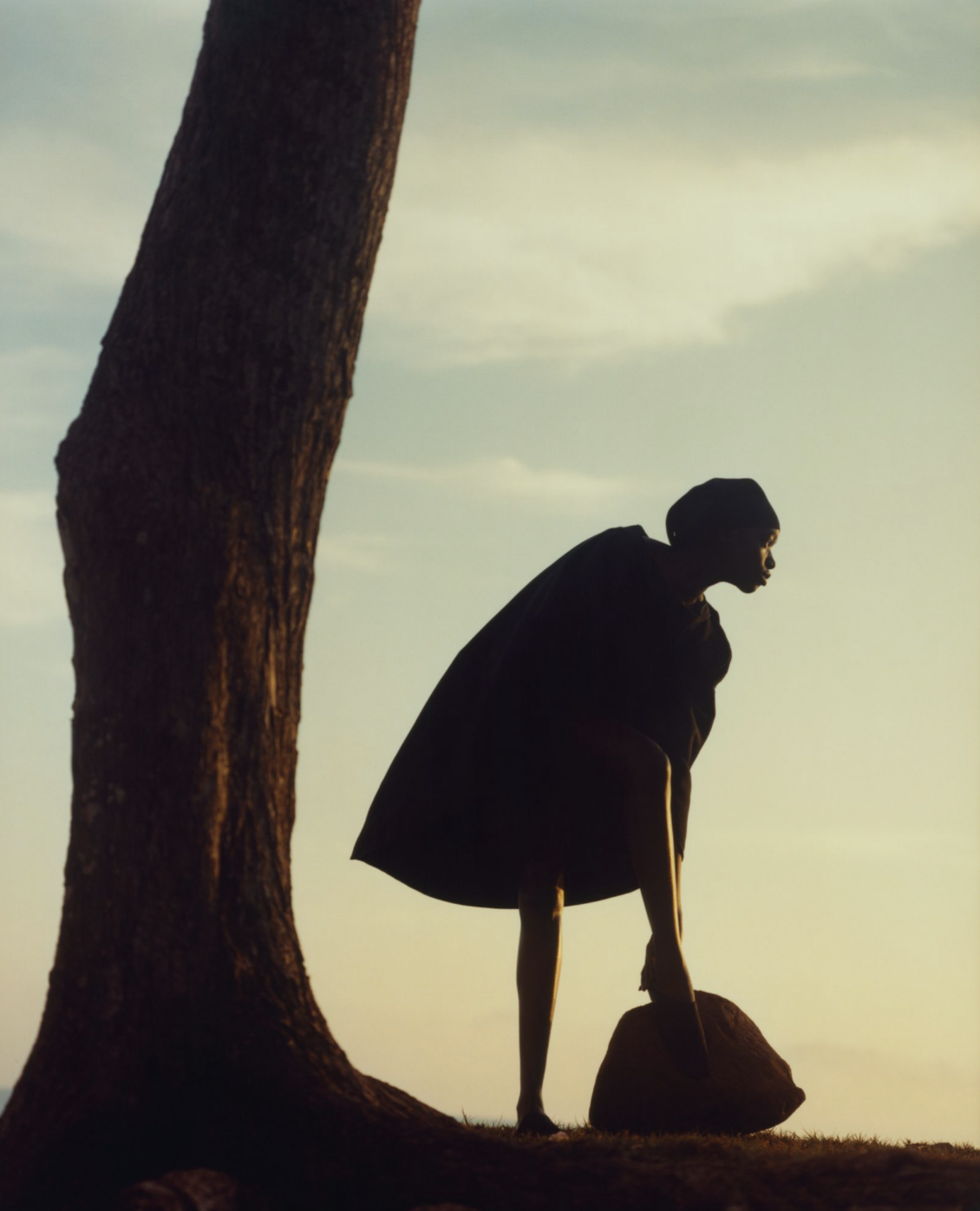
We're having a beautiful moment where we've reached a point of making our best photos yet. Recently we understood something about lighting that has literally blown our minds.
— JIBRIL
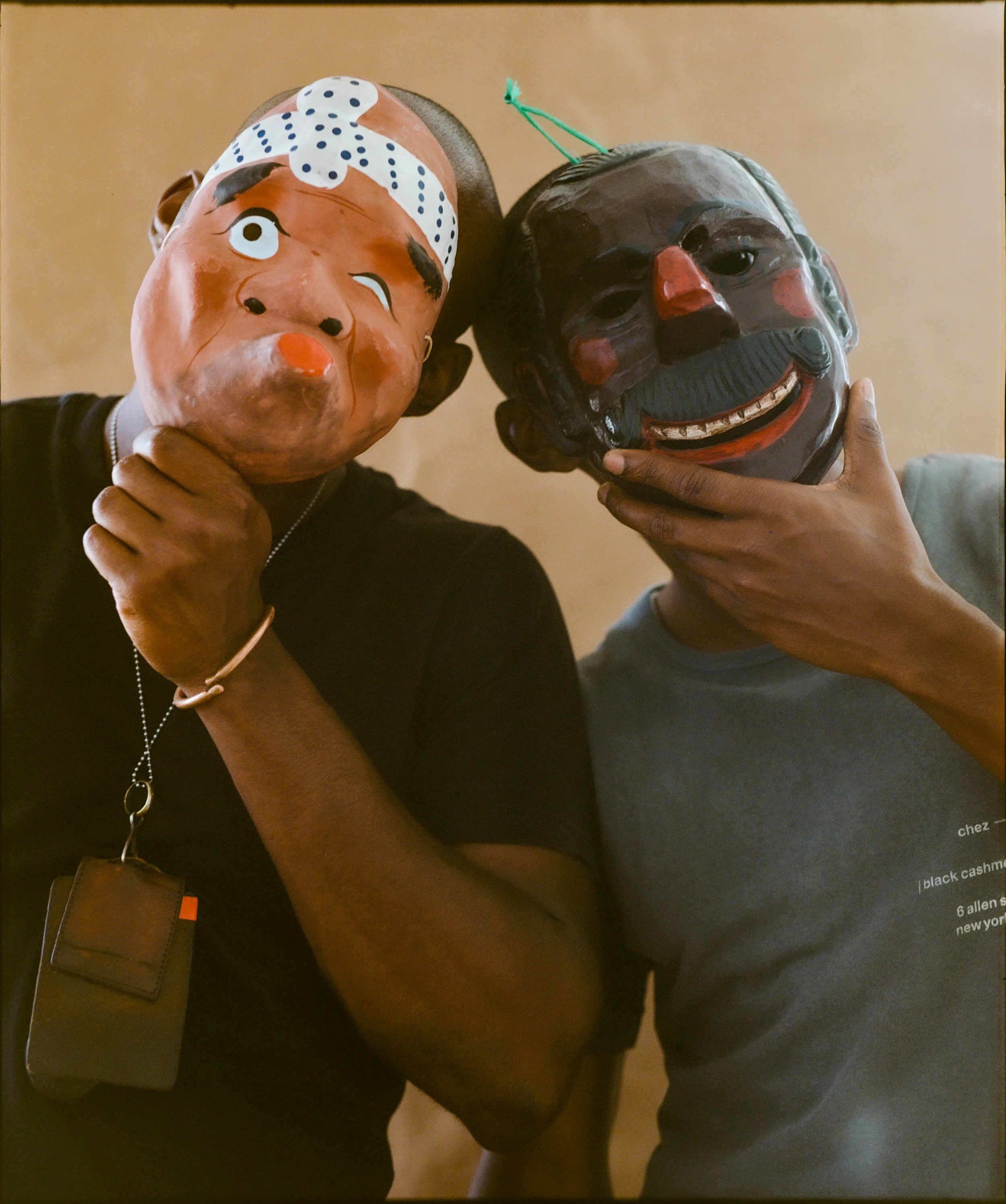
“I guess with the photography stuff we've almost had to confront the fact that it really isn't ours. We won't find our individuality in it and have to surrender to the union of us collaborating.”
JALAN —
INTERVIEW
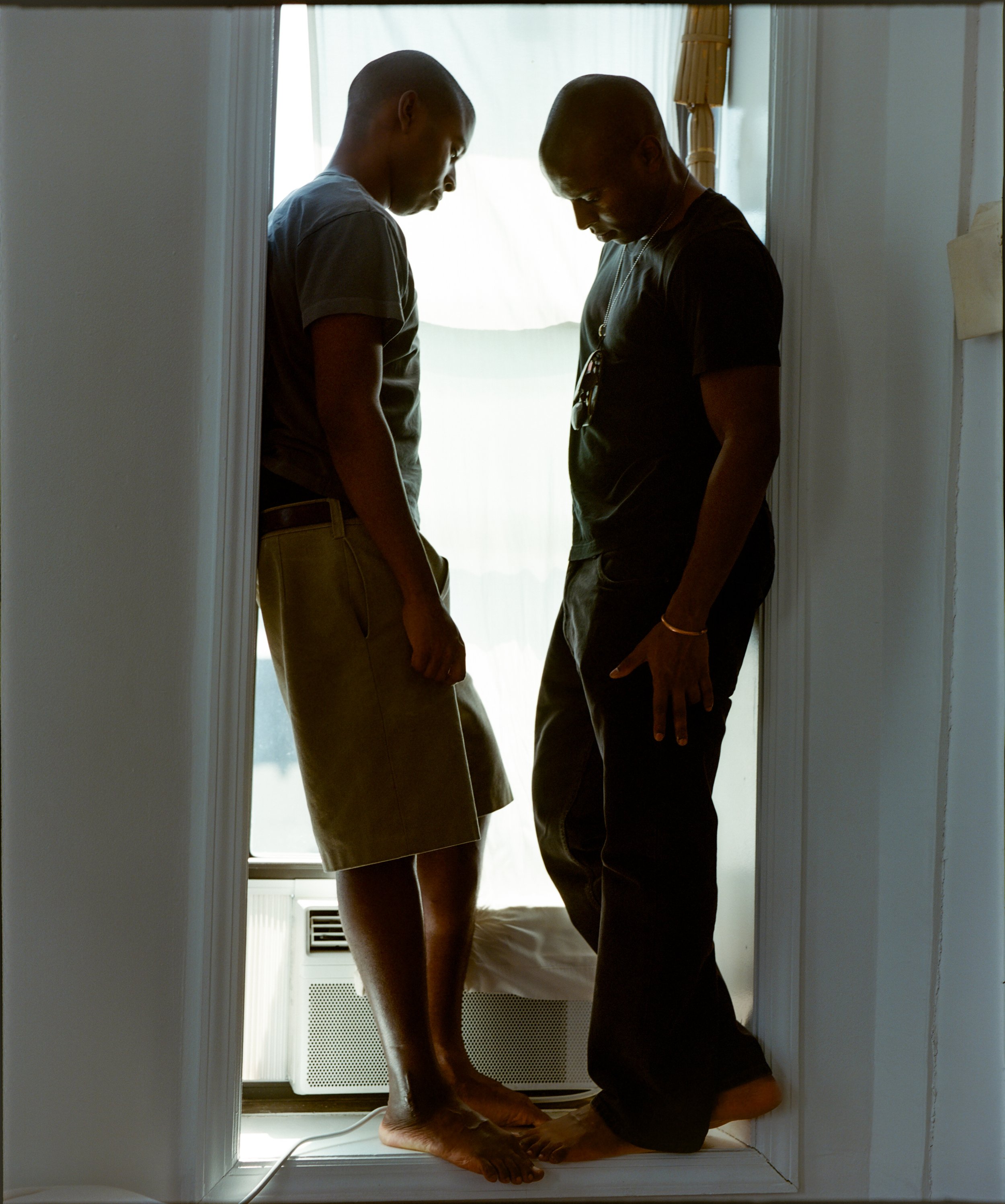
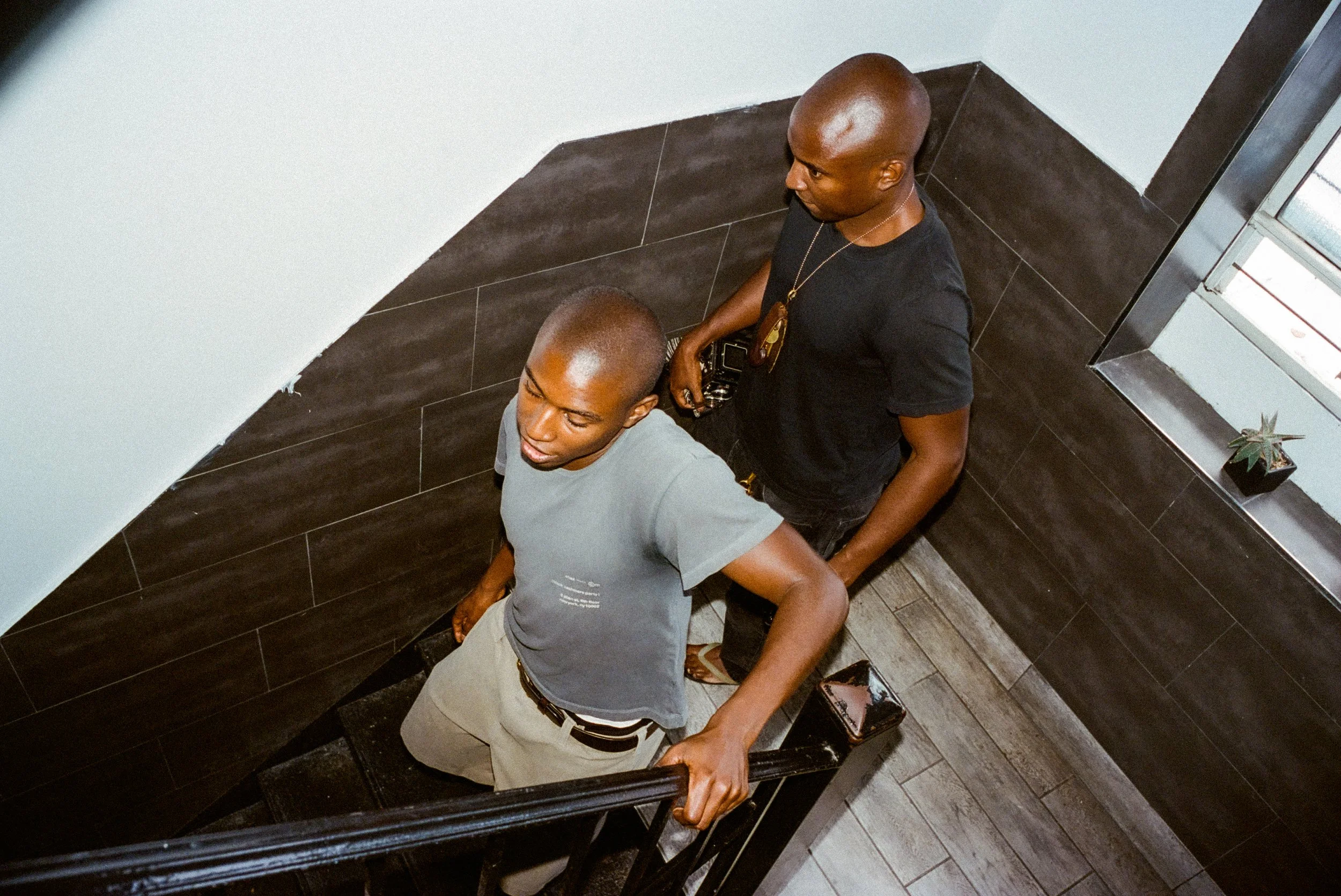
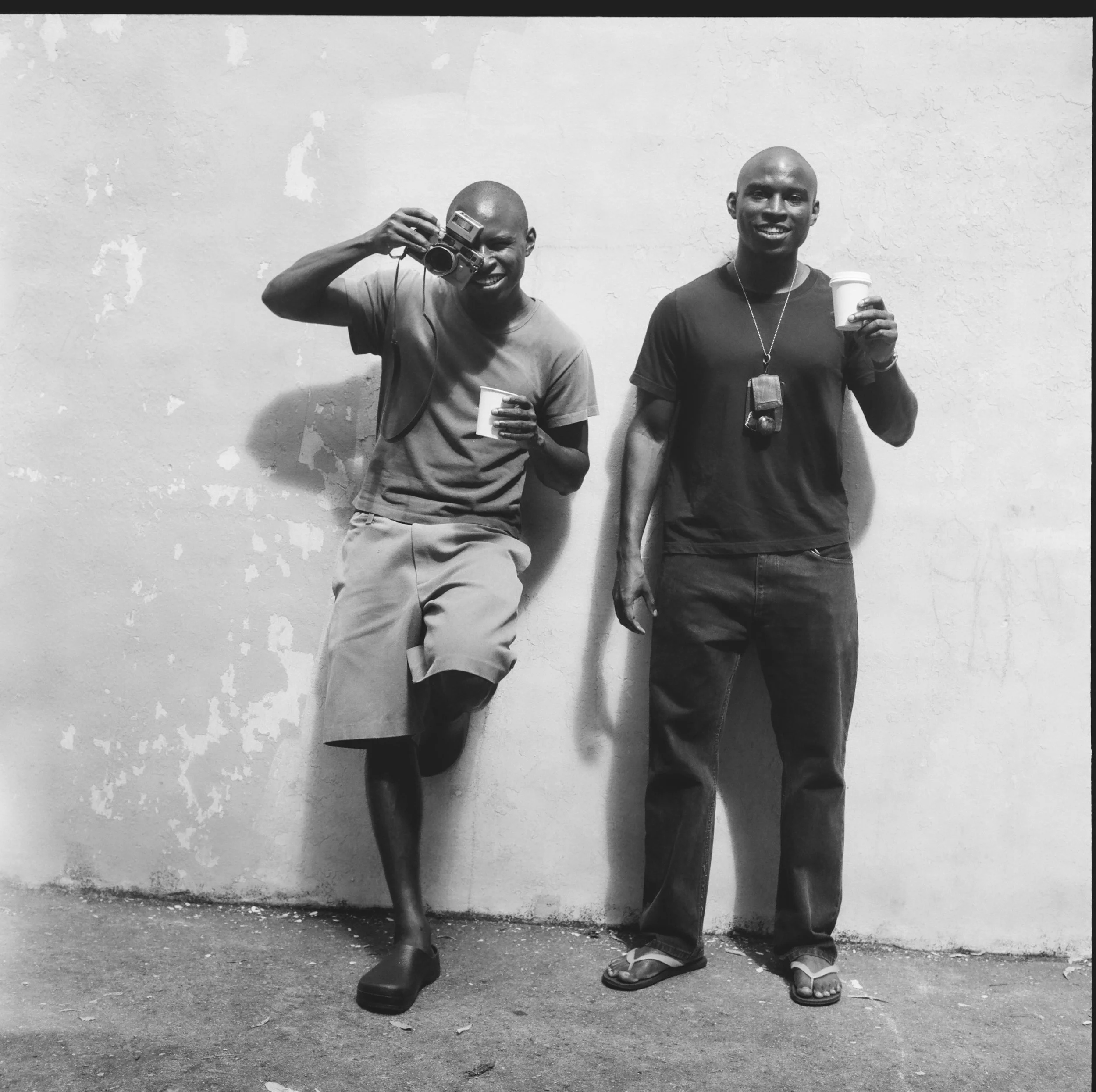
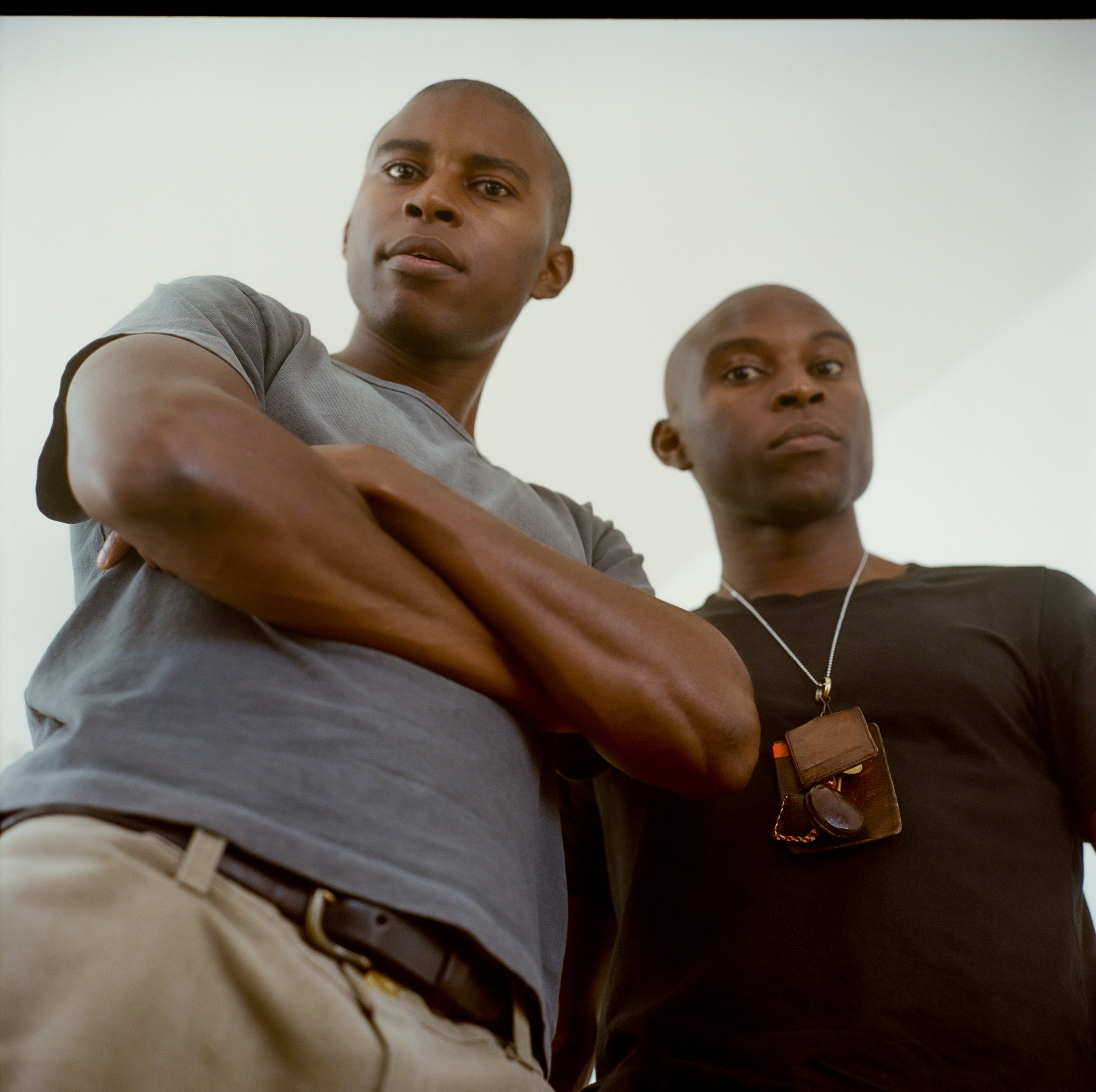
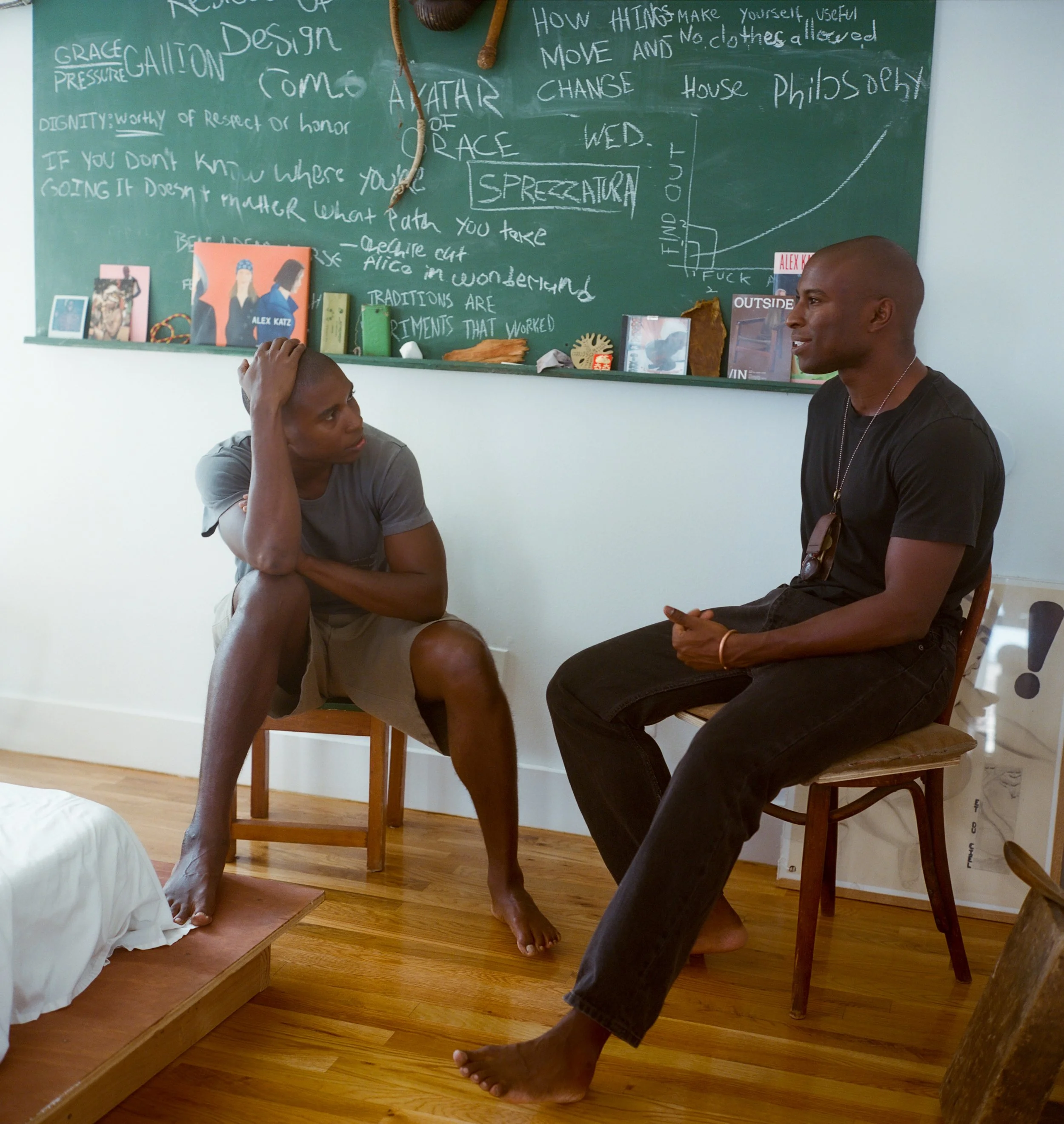
Durimel brothers interview each other in Brooklyn.
Video - David Katzinger | Creative - Kathleen Howes | Edit - Gus Spencer
words BY iAN RANDOLPH | images by David Katzinger
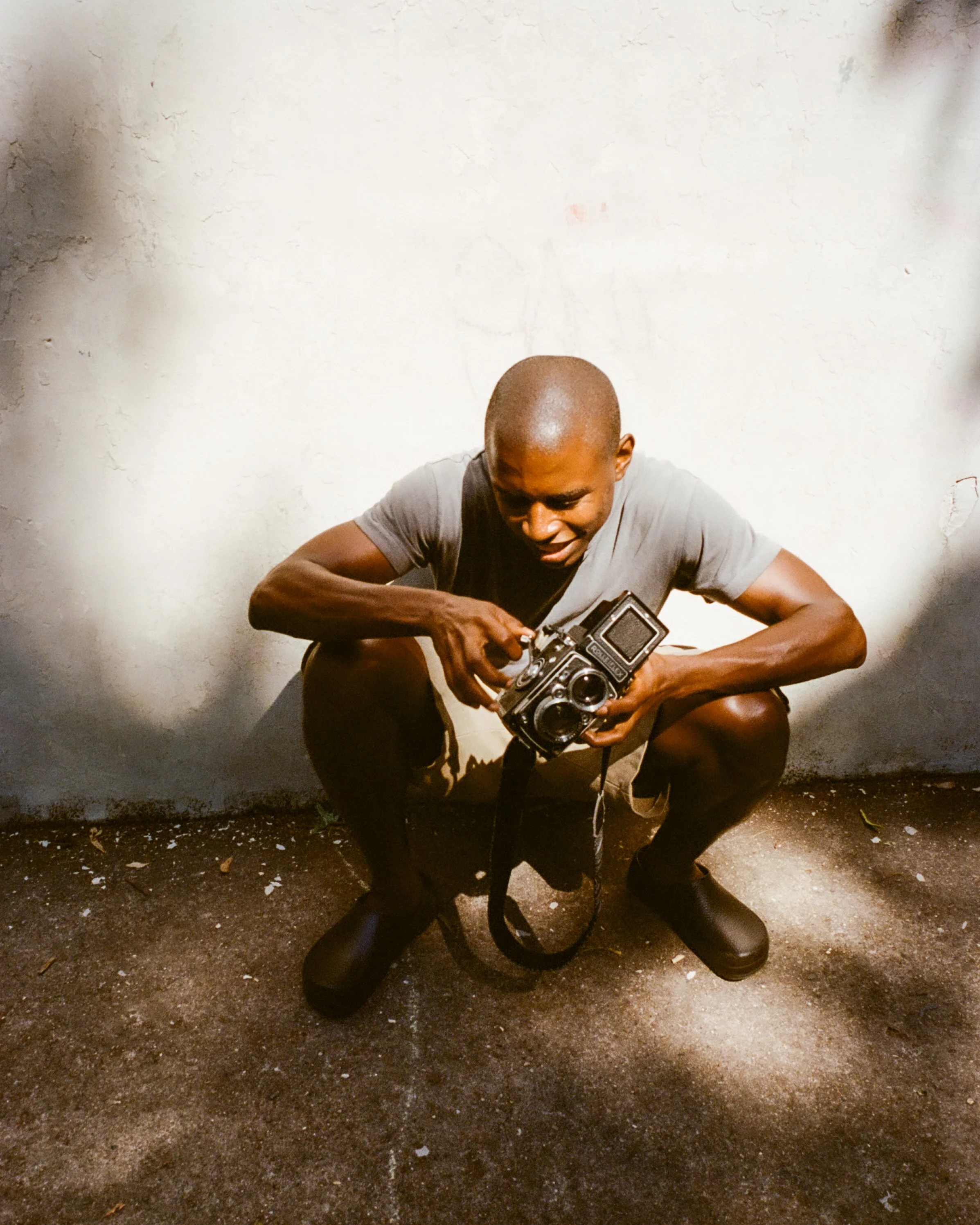
Twin photographers, Jalan and Jibril Durimel, move through fashion & beyond it, using light, shadow, & shared vision to explore identity, duality, & the quiet spaces where humanity reveals itself.
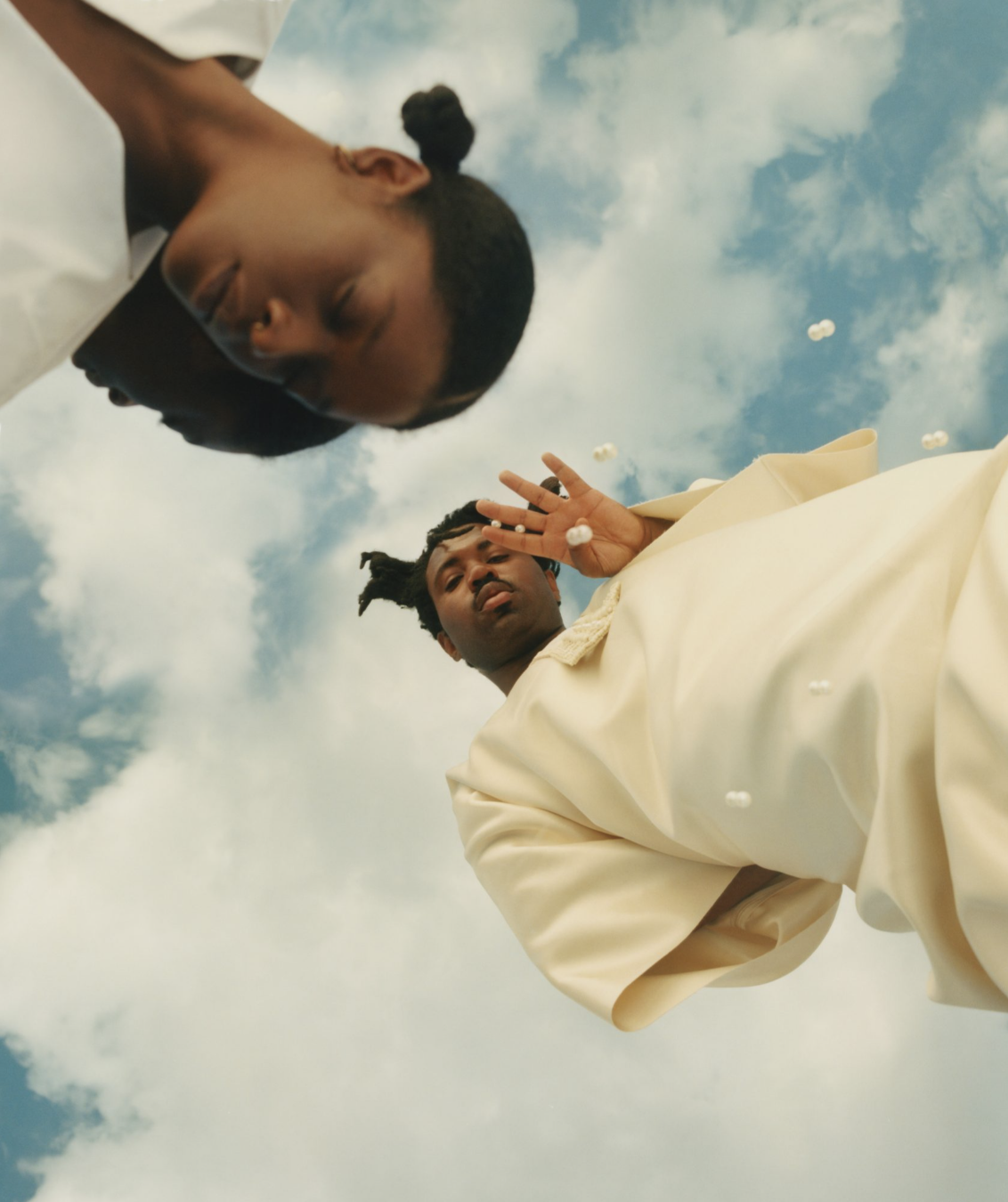
Born twins and forged collaborators, Jalan and Jibril Durimel have built a photographic language that feels both intimate and monumental. Rising from modest beginnings, they taught themselves to see beauty in nuance, using light, shadow, and emotion to elevate stories often left at the margins. That perspective has carried them onto the world’s biggest fashion stages, shaping campaigns for brands like Kenzo and adidas x Wales Bonner with work appearing in i-D, Dazed, Vogue, and L’Uomo Vogue and many other publications. They’ve exhibited their work at institutions including the Foam Museum (Amsterdam), Haus der Statistik (Berlin), and the Fondation Louis Vuitton (Paris) and have helped create iconic imagery for world talents such as the artist Sampha. Yet despite international acclaim, their images remain grounded in curiosity, identity, and human connection. Together, the Durimel brothers prove that vision, not circumstance, defines how far an artist can go.
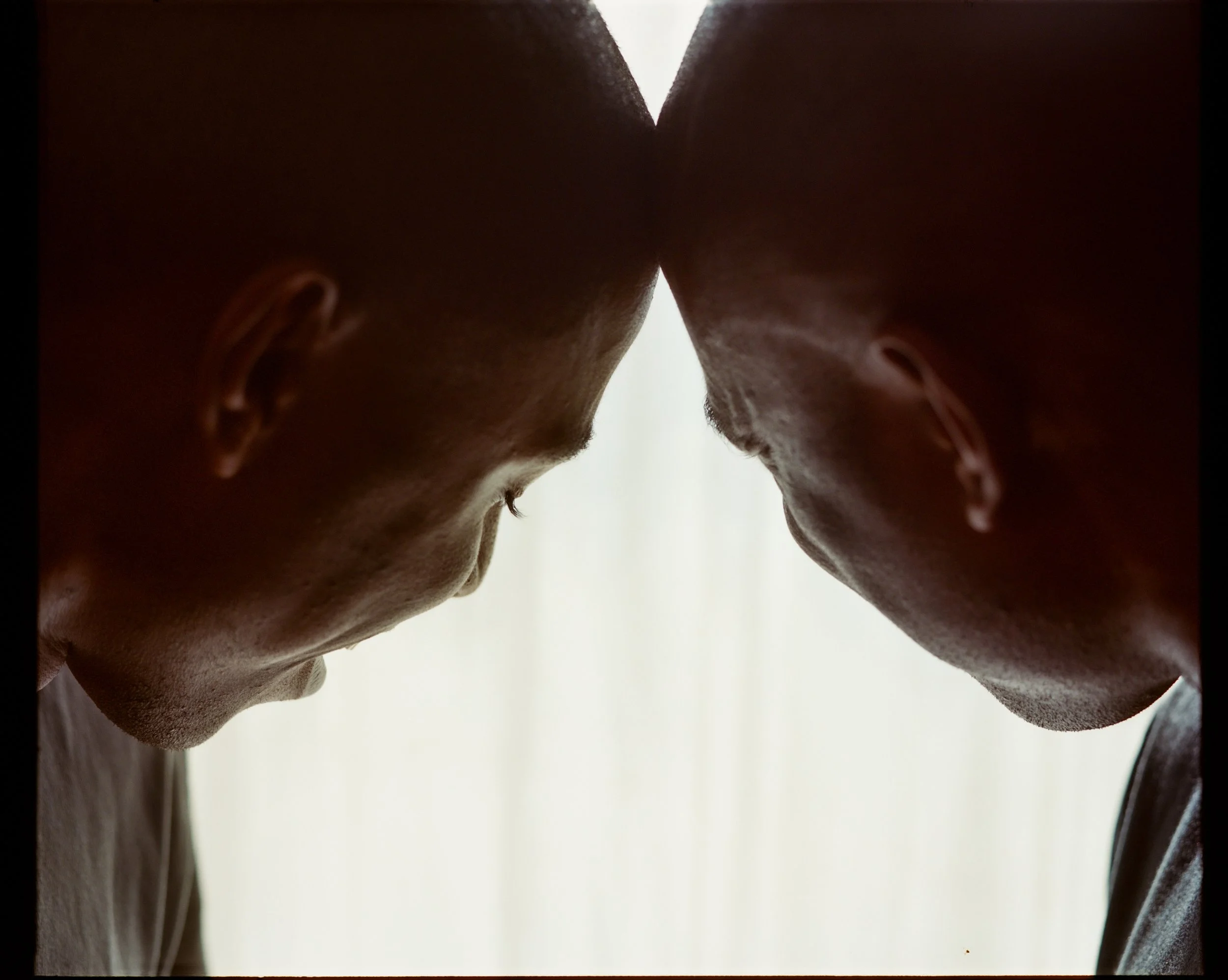
Much of identity is rooted in perception. To make sense of the world, we reduce it to opposites: man and woman, good and bad, light and dark. In reality, most of existence lives in between. These grey spaces can feel unsettling if left unexamined, but acknowledging them is essential. The acceptance we seek from the world begins with accepting complexity within ourselves. These themes are central to the photographic work of sibling artists Jalan and Jibril.
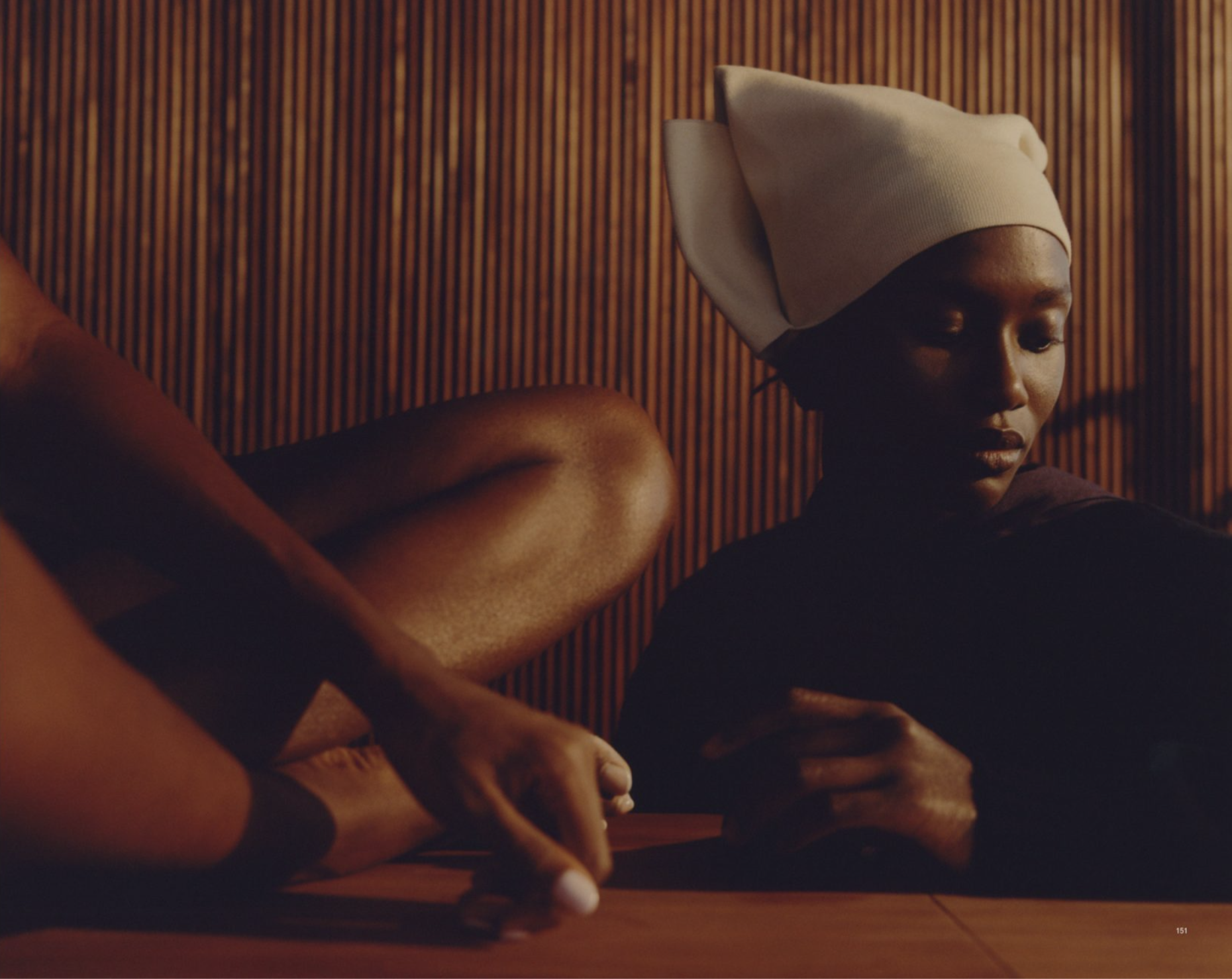
The brother’s creative practices extend beyond fashion and beyond the frame. Through soft illumination against dark surfaces, they reveal beauty and nuance in subjects often overlooked. Durimel is not a brand or a constructed persona, it is two brothers sharing a vision: to explore what lies beneath the surface and to offer a quieter, more serene way of seeing the world.
Ian Randolph: As brothers, as twins and as collaborators, how do you define ways to separate each other as individual artists in your work?
Jalan: I guess with the photography stuff we've almost had to confront the fact that it really isn't ours. We won't find our individuality in it and have to surrender to the union of us collaborating.
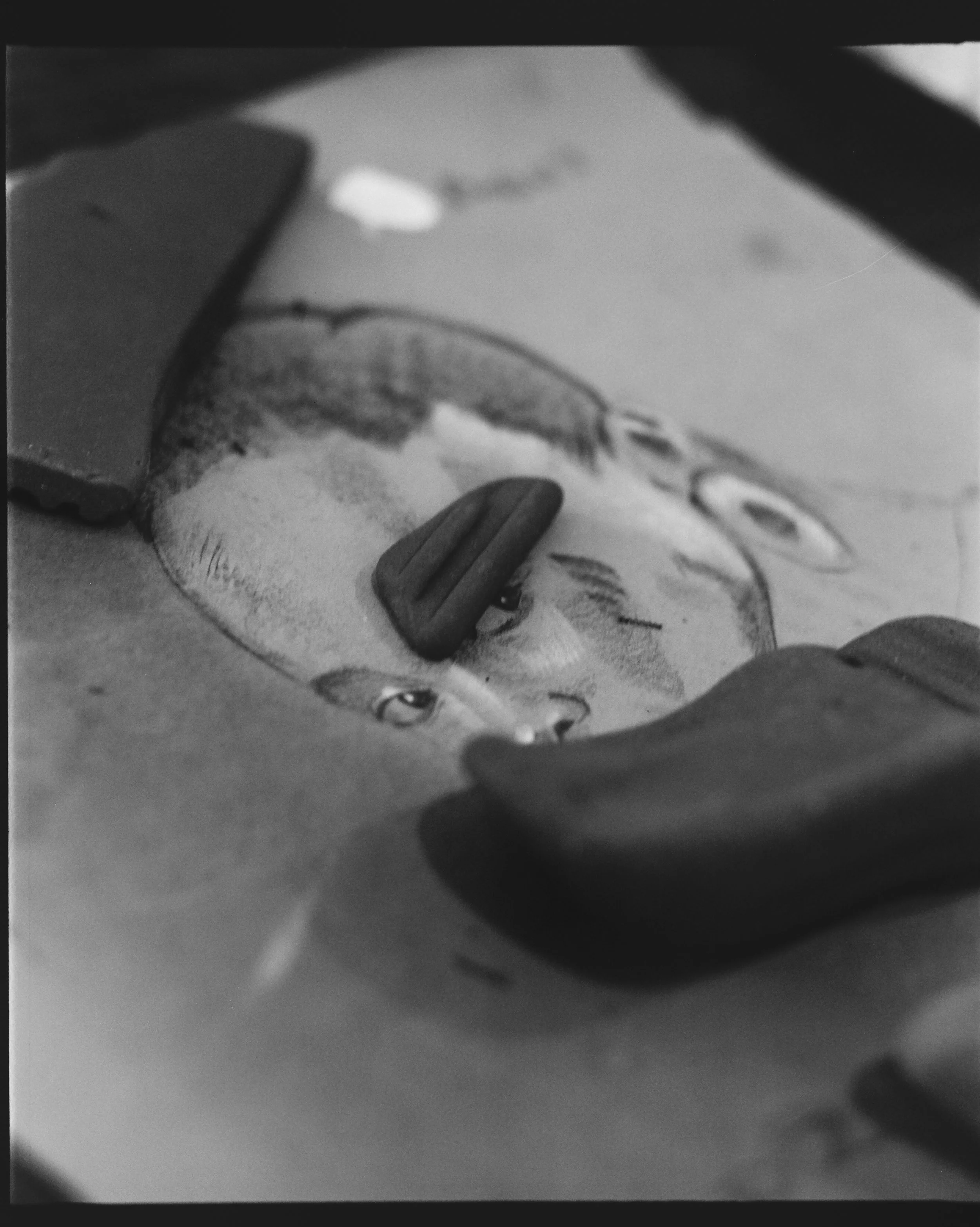
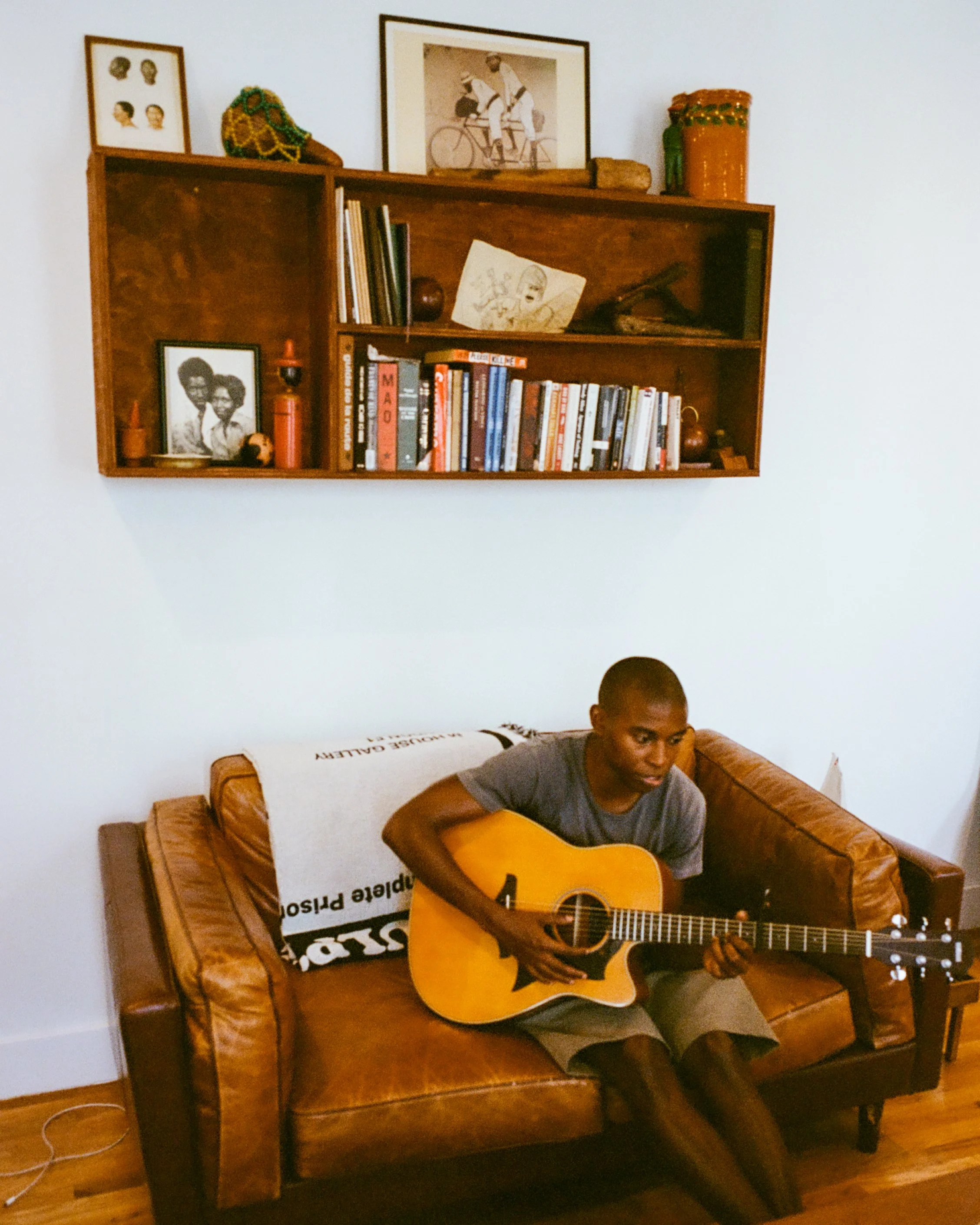
There are going to be compromises, but the fun thing is I’ve spent the past four or five years not even practicing our own practice. I've been learning the guitar, learning to write songs, and my brother Jibril has been learning to draw the figure so that he could potentially paint. He would want to be an individual artist on his own and I'd like to make music eventually, so I guess just even practicing that alone has given us a lot of independence I would say.
Trying to find independence in photography was a bit unrealistic. Any day felt like a struggle sometimes.
IR: When did you two come to terms with doing photography together?
Jibril: We started playing with our own camera when we were 16 years old. It started out very much like a comedic thing where we started a YouTube show based in comedy and reporting on pop culture in a comedic way. It was very lo-fi because it was during the beginning of YouTube, so everything was very much like a tiny little project. I think Jalan got 20 subscribers and one day he invited me onto the show, introduced me to his subscribers, and then we just built it up. It was all comedy until it became a fashion blog and then we came into the fashion world. We looked at doing editorials ourselves and got really edgy. It was so weird, but being from the Caribbean, we truly thought these editorials had some deep artistic meaning that was beyond our Caribbean brain. We thought there was something deep happening and we just needed to at least pretend that we knew what was happening.
IR: Without naming names...Was there a moment for you guys when you found something absurdly funny while working on a fashion job?
Jibril: I think it really hit us during the first official commercial we did. We couldn’t believe some of the ridiculous requests the talent was making, coffee machines, oddly specific demands, even getting his hair done by a stylist and being extremely particular about it. The people running the shoot were fully caught up in it too.
Over time, we kept seeing these kinds of moments, this idea of “luxury” in the industry that often feels pretty absurd. You start to realize that fashion being so focused on image really shows itself. A lot of things stay at the level of superficial visuals, even when people try to make them seem very deep or take the image way too seriously. That’s where it starts to feel a bit ridiculous.
Because of that, we try to keep a sense of innocence while working in the industry, but also keep some distance. At the same time, we’re open to everyone. We’ve met incredible people deep inside fashion who were genuinely kind, really rich souls. That contrast has been interesting, because you don’t hear much about those people. The ones who don’t really care about fashion itself, but are just great at typography, or are strong art directors, and that’s enough. Those have been some of our favorite people to work with.
A big part of what we love is traveling and meeting all these characters. You never know who you’ll cross paths with. We’re always curious, talking to production assistants or the catering crew, people who share amazing stories while working and eating on set.
One time we talked to a captain of wealthy people's sailboats. He shared perspectives we’d never heard before, especially about the loneliness that many captains feel. That conversation really pulled us into a completely different world, all because of a fashion commercial.
Growing up in the Canary Islands and Miami, we’ve always loved people, and we like to give those people attention. That’s what keeps it interesting for us.
IR: Presently, you both have shifted a bit in other creative endeavors such as music and painting. What was the moment where you both felt that shift into creating something outside of photography?
Jalan: I think my route to music was never a dramatic impulse. I dated a musician and we broke up. I felt like we had shared experiences creatively after we broke up. I don't know where Jibril and I started to consciously merge our creative lives together, but it kind of gave us permission to pursue other like-minded endeavors. It was also our environment. We would go from jokingly rapping with friends and other artists to trying to make music and art for ourselves in our spare time. I didn't really like folk music when I was younger, which is funny given how I play more of that now. When it comes to art, my brother improved tremendously the last lesson he had since he started to draw. It's been pretty remarkable, but I guess there was just intuition. Our freelance photography practice gives us a lot of free time to return to these things because we decided not to focus so much on photography all of the time. We would like to do commercial work and in between those jobs, watch tutorials and learn while working on our other things.
IR: Would you guys like to transition into both music and art full-time?
Jalan: Yeah. When I think about this, it's a very intimate artistic practice that revealed a lot about ourselves in the past couple of years. We've grown very close because of it, but we've discovered things about ourselves as individuals. We're very excited to share our work because we understand and enjoy this partnership as artists.
We have individual autonomy. Autonomy is something that we feel excited to nurture and we're excited about seeing what that looks like for us as individuals, but I also feel like if I really look at it any longer we would really try to break away from each other, so that we can come back to one another stronger.
We really love cinema, probably more than any art because you can encapsulate the spirit of the antagonist and the spirit of a protagonist and not be judged. You can be the bad guy in a movie and still make people laugh. It's a bit difficult to do that as a musician because you have to be the protagonist all the time.
IR: Tell me about Tekashi69 or Kanye. Y'all can be villains too.
Jibril: (Laughs) I think with someone like Kanye West, he's so great with music videos like “Runaway” and did it where he took the best of cinema within a musical context. I think that's why Michael Jackson was respected with “Thriller”.
IR: Yeah or “Bad”. Martin Scorsese directed that...you guys should just take a break and come back on some Oasis shit.
Jalan: (Laughs) Low-key...
IR: Which brother would be the protagonist or the antagonist?
Jibril: Yoooo, you know...
We're both levelheaded kind of people, but I think as time goes Jalan would be more believable as a protagonist I would say. It's really interesting because we're always thinking that one brother is better than the other one, but as time goes on we've realized that we're both rather feminine men and we like that about ourselves.
I'm actually the bad one, but I just disguise it (Laughs). I think bad stuff sometimes and I feel like people hide that about themselves. I understand. I'm just more honest about it.
IR: You're more of a diplomatic bad boy.
Jibril: Yeah, that's a good way to put it. I'm the diplomat.
IR: What's one distinctive quality you love about one another?
Jibril: I mean one thing that's so very clear to me that I love IS that he does the music thing. My brother is like one of my favorite musicians. I really admire and respect what he's done. He's also more straightforward, which I love.
Jalan: Thank you, man...
IR: Is there something in the near future that you guys are excited about?
Jibril: We're having a beautiful moment where we've reached a point of making our best photos yet. Recently we understood something about lighting that has literally blown our minds. We now can bring drama to a photo and it's really exciting.
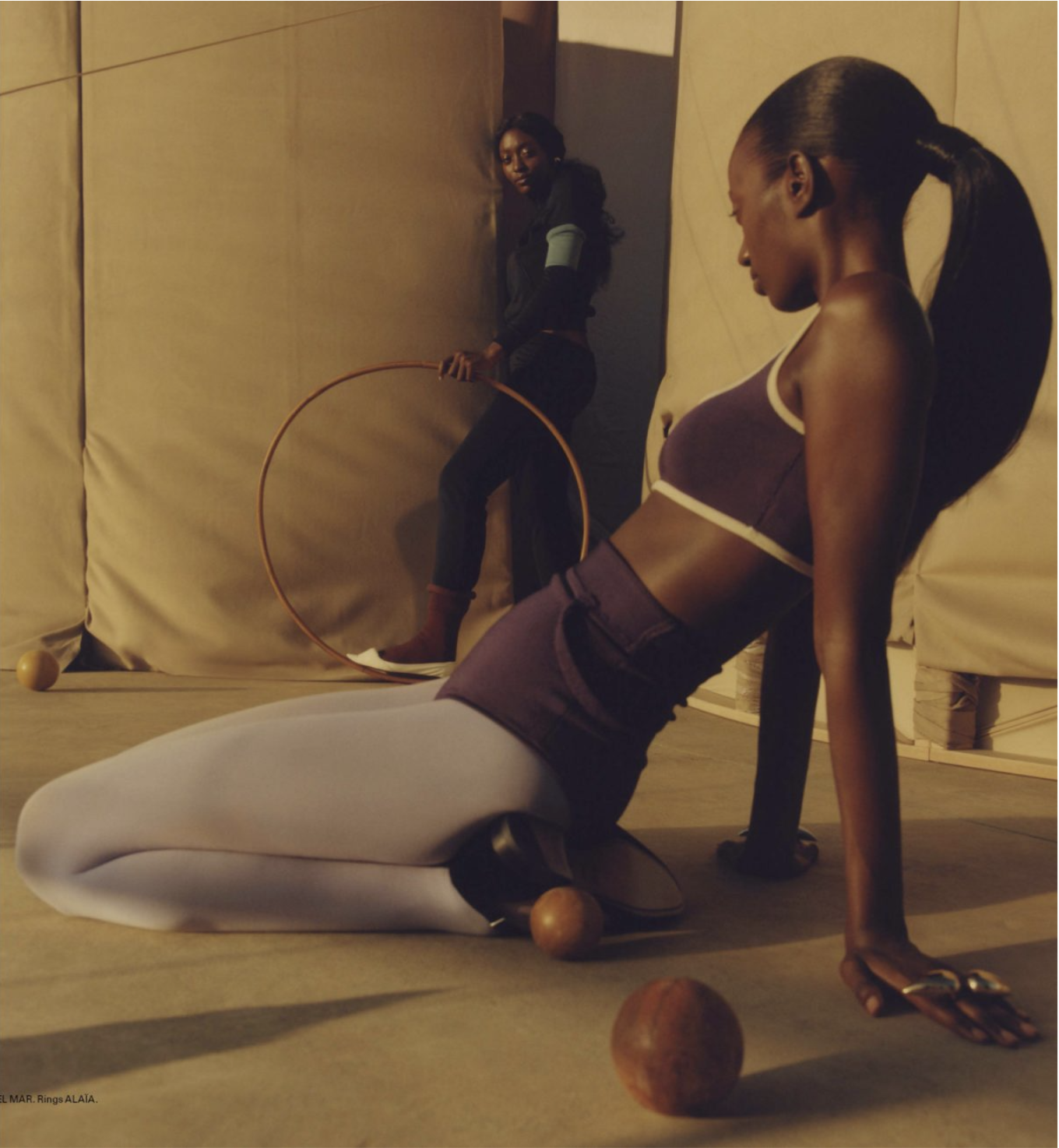
We've gotten obsessed through understanding how to bring your own light and using that to pair with old tones or materials to create an atmosphere. It started with collecting small rocks on traveling shoots. A few from Senegal, a few from another part of the world. Then we would use those in our work by using light to experiment with different color pallets. At this point, it's the same feeling of excitement we felt like when we first started.
IR: Funny enough, that was one of the reasons why I became a fan of your work. Your focus on lighting exposure and its relation to certain materials, but most importantly, black skin. The subject's relation to their environment conjures a feeling of something you see in a heavenly dream or something of mere fantasy.
Jibril: Thank you. I think essentially when we started off we imitated a lot of documentary photographers. We traveled to different places, read a lot of fiction, and watched Lord of the Rings. We love the wonder and journey of things. You can call it fantasy, but we see it more as seeing and going beyond something for innovation. That's what being inventive is and that's what we do as artists. As you mentioned about the future, it could be accurate with the terminator, but I don't know (laughs). I think it's going to be a movement with the future hopefully not going into the wrong direction, but ascending into something more fantastic.
IR: What is your idea of Afro-futurism?
Jalan: You know, it's too large for me to know where my contribution will be or not. We are so fixed into this idea of using references, but looking for references that aren't mirrors of us. These things help us as portals into the things that we never knew about ourselves. We can always have this conversation with friends about appropriation, but we live in an age of the digital revolution, so everything is seen and taken on a global scale. It's a tricky subject in terms of Afro-futurism because what is culture now if everyone is appropriating from each other.
IR: Yeah, it's hard now to identify as anything. Everyone wants to be everything and nothing at the same time.
Jibril: I would say that for now we're living in a time where we've been pretty well received. I do worry sometimes that it's becoming a bit forceful on how much they want to see more diverse groups of people in fashion. It scares me more to think of us being watered down with bad art to the point that it would tire an audience to not want to see more black faces.
I'm more interested in putting blinders on, keep making images, and see how they'll receive it afterwards. I think we live in a time right now where people really want to see you.
You know it's funny because I feel like a lot of times I hear people saying that this type of art is coming out for political and social reasons. But in the back of my mind, I don't see black photos of black people because of political or social reasons. I genuinely think this movement would've happened at this time in history for the fact that people wanted to see something different. They wanted novelty. The same goes for white artists as well. You have your Richard Avedon or Bruce Weber. They did their photographs of their white boys and they were great. They did it in the 90’s and it was incredible. They did it for decades, but now I genuinely think society just wants to see images of different people and that's super exciting. I just hope that it continues to be a push for less junk food and more quality work.
IR: Yeah, that's funny you said that because presently I don't like our past as just being slaves nor our future as being Kings and Queens on flying Cadillacs. The media does us dirty. Going back to cinema, I think we both agree that it also ties into us being seen in a more progressive and multi-dimensional fashion. Black is infinite to me.
Jalan: (Laughs) That's Normal! I love that you said that. Funny enough, Spike Lee I think was kind of dealing with this. I know I feel like he's going more into this like black thing, but what I love is when he makes these other movies like Inside Man and 25th Hour. These movies on my wall show us hands down that as a black director you can do it all. You can do it in a very elegant manner, so that's what we're more interested in doing. We're interested in not only having our talk about the black perspective, but we're excited to bring the black figure as an archetype for the human to represent an archetype for the human universe. The same way that we look at the Statue of David. Yeah, that's a white guy, but he's from the story of the Michelangelo theater. It's more about the story of a woman giving birth to a child in a dangerous world. I love hard stories like this and we're more interested in using black figures to help tell those kinds of stories I say.
IR: I remember you guys from your street fashion days with Union to working with Kenzo. Seeing your arc and where it's led you now, is there a preference to street or high fashion?
Jibril: We question that sometimes. We like to work with any brands that feel natural or we have a strong draw to it. A bit off topic, but in recent years we're becoming more spiritual. Christianity or other orthodox religions left us curious to understand what it all means. For us, understanding that and being less restrictive to what feels divine has brought us closer to nature and really helped our work.
Jibril: It's interesting because we didn't grow up spiritually, but we always had Christianity around. We were in the Caribbean where it was all around, but it was all pretty cool. When we grew up there in our teenage years, our parents would force us to go to church, but we still were curious about it all. I know it's uncool nowadays to be spiritual, but I low-key think that's what's been missing in the world. If it's not God, we've made something else our God, which has left some of us empty in a way. I'm not saying that everyone should get religious. It's more of connecting back with the earth or something beyond ourselves to be better people.
Psychologists do a lot of studies on deep intuition and our conscience in relation to spirituality, which still hasn't been debunked. It's cool to not understand the unexplainable. I think right now a lot of people are struggling with this question of what to do if they participate in the arts and what to give up or deny once they're in it. Not to sound pretentious, but spirituality is one of those things that has helped us as artists...
IR: What does heaven or paradise look like to you?
Jibril: It's making me think of this quote from Leonardo da Vinci where he says that a well-spent day brings happy sleep, so a life well spent brings happy death. In a healthy way, I see heaven on a simplified level.
I think a clear conscience comes through. Nurturing the intuition inside or attending to courage by living a life worthwhile and dying by it. I think spirituality has helped us simplify things to get a better understanding of it. By removing superstition, we just look at life in a more practical way. More innocent and that's been so fun for us. God doesn't need Santa Claus. Life is more beautiful and complex enough.